
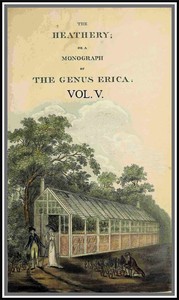
The heathery; or, A monograph of the genus Erica. vol. 5 by Andrews
Let's be clear from the start: this is not a novel. 'The Heathery; or, A Monograph of the Genus Erica' is exactly what it says on the tin—a detailed, scientific study of heather plants. Published in the early 1800s, this fifth volume by Henry Cranke Andrews is part of a massive effort to catalog every known species in the Erica genus. Think of it as a field guide, an encyclopedia, and an art book all rolled into one. Andrews works through species systematically, providing Latin names, descriptions of their physical features (leaves, flowers, stems), notes on where they're found, and stunning, hand-colored copperplate engravings.
The Story
There's no traditional plot. The "story" is the journey of scientific discovery itself. Andrews acts as a meticulous tour guide through a world of tiny, often look-alike plants. He presents each species, arguing for its unique place in the botanical family tree. The drama is in the details: the precise curve of a leaf, the number of flowers in a cluster, the specific shade of pink in a bloom. He compares new specimens to known ones, correcting past errors and building a clearer picture. You follow along as he pieces together a global puzzle, plant by plant, from the moors of Scotland to the slopes of South Africa.
Why You Should Read It
You should read it for the quiet magic of deep focus. In our fast-paced world, this book is an antidote. It forces you to slow down and really *see*. The illustrations are breathtaking—not just accurate, but full of life. More than that, it's a powerful reminder of human curiosity. Andrews wasn't writing for fame; he was driven by a genuine desire to understand and share the beauty of a single, often overlooked, part of nature. Reading it, you feel his dedication. It turns a simple shrub into a subject of wonder. It’s less about learning facts about heather and more about sharing in a mindset of patient, passionate observation.
Final Verdict
This is a niche read, but a rewarding one. It's perfect for gardeners, botanical art lovers, or anyone fascinated by the history of science. If you enjoy slow hobbies like birdwatching, sketching, or detailed crafts, you'll appreciate its rhythm. It's also great for anyone seeking a beautiful, physical book to disconnect with—the art alone is worth it. It's not for someone looking for a gripping narrative, but if you want to spend a few hours in the calm, focused mind of a 19th-century naturalist, this is your ticket.
There are no legal restrictions on this material. Distribute this work to help spread literacy.
Robert Jones
2 months agoWhile browsing through various academic sources, the bibliography and references suggest a high level of research and authority. It’s hard to find this much value in a single source these days.
Jessica Brown
4 months agoExactly what I was looking for, thanks!
William Wilson
3 months agoThis digital copy caught my eye due to its reputation, the way the author breaks down the core concepts is remarkably clear. The price-to-value ratio here is simply unbeatable.
Robert Lee
2 months agoIt’s rare to find such a well-structured narrative nowadays, the quality of the diagrams and illustrations (if applicable) is top-notch. Simple, effective, and authoritative – what else could you ask for?





Robert Martinez
2 months agoThe digital index is well-organized, making research much faster.