
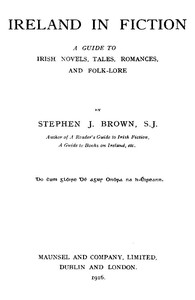
Ireland in Fiction: A Guide to Irish Novels, Tales, Romances, and Folk-lore
Published in 1919, Stephen J. M. Brown's Ireland in Fiction is something special. It’s not a storybook, but a guidebook for story lovers. Brown, a Jesuit priest and scholar, saw that readers and researchers were getting lost in the growing world of Irish novels. His solution was to create a master index, a book that organizes fiction based on the Irish counties, towns, and landmarks where the stories are set.
The Story
There's no traditional plot here. Instead, the "story" is Brown's journey to make sense of a national literature. He sorts hundreds of novels, tales, and collections of folklore. For each entry, he gives you the title, author, publication date, and then the real magic: a short description of what the book is about and, often, Brown's own sharp opinion on its quality or historical importance. He points out which books give a true picture of Irish life and which are just romantic stereotypes. He connects stories to the real history happening in the background. Reading it feels like having a brilliant, slightly opinionated librarian sitting next to you, whispering recommendations and warnings.
Why You Should Read It
You should pick this up for the sheer sense of discovery. It turns reading into an adventure. Maybe you have ancestors from County Cork. You can look it up and find a list of novels written in 1919 that are set right there. It’s a direct bridge to the past. Brown’s voice is the best part—he’s witty, direct, and his love for a good story shines on every page. He isn't dry or academic; he’s a fan first. This book reminds you that literature isn't just about ideas, it's about places and people. It makes you see the map of Ireland not just as land, but as a living library.
Final Verdict
This is the perfect book for a very specific kind of person: the curious reader. It's for anyone planning a trip to Ireland who wants to read novels about the places they'll visit. It's for genealogy buffs who want to understand the world their family came from. It's for students and writers looking for a starting point in Irish studies. Most of all, it's for anyone who loves the thrill of the hunt—the joy of finding a forgotten book on a library shelf, recommended by a guide from a hundred years ago. It’s a time capsule and a compass, all in one.
Legal analysis indicates this work is in the public domain. You do not need permission to reproduce this work.
George Lee
1 year agoInitially, I was looking for a specific answer, but the insights into future trends are particularly thought-provoking. I appreciate the effort that went into this curation.
Richard Johnson
7 months agoThe author provides a very nuanced critique of current methodologies.
Karen Allen
3 months agoGood quality content.
Patricia Moore
2 years agoBeautifully written.

John Perez
1 year agoI stumbled upon this title during my weekend research and the level of detail in the second half of the book is truly impressive. Highly recommended for those seeking credible information.