
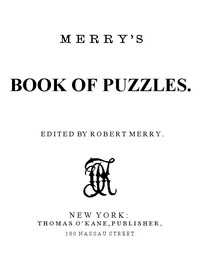
Merry's Book of Puzzles by J. N. Stearns
So, here’s the deal with this book. It’s framed as a real puzzle book published in 1882, compiled by J.N. Stearns. But the genius twist is that the puzzles themselves—the word games, logic problems, and picture riddles—are actually the narrative. They were supposedly created by a bright, curious teenager named Merry, and as you work through them, you piece together her life, her family secrets, and the strange circumstances surrounding her disappearance.
The Story
You, the reader, are essentially an archivist or a curious person who has stumbled upon this old volume. The book presents Merry’s puzzles exactly as they were ‘originally’ printed, with charming period illustrations. But notes in the margins (added by a modern editor) guide you. They point out patterns: certain answers spell out hidden messages, specific puzzles reference real historical events of the 1870s, and recurring symbols seem to map to locations around Merry’s hometown. The central mystery is straightforward: What happened to Merry? Did she run away, was she sent away, or did something more sinister occur? The puzzles are your only lead.
Why You Should Read It
This isn’t a passive reading experience. It’s interactive in the best way. You feel a real connection to Merry because you’re engaging with her mind directly through the puzzles she loved. The book does an amazing job of making history feel personal and urgent. You’re not just reading about a Victorian girl; you’re solving her ciphers, which makes her world—with its strict social rules and limited options for young women—feel incredibly vivid and often frustrating. The puzzles are genuinely clever. Some are easy, some will make you stare at the page for ten minutes, but solving them gives you a genuine thrill of discovery.
Final Verdict
This book is perfect for anyone who loves a good mystery, enjoys historical fiction, or just likes solving puzzles. It’s a fantastic choice for a book club because there’s so much to discuss—the solutions, the history, and Merry’s fate. If you liked the vibe of ‘The Westing Game’ or the code-breaking in ‘The Gold-Bug,’ you’ll adore this. It’s a unique, absorbing blend of story and game that proves a book can be more than just words on a page. It can be an invitation to a secret, waiting to be unlocked.
This historical work is free of copyright protections. It serves as a testament to our shared literary heritage.
Robert Wright
2 years agoUsed this for my thesis, incredibly useful.