
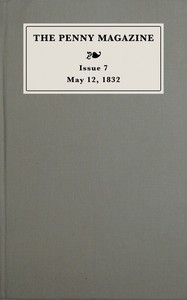
The penny magazine of the Society for the Diffusion of Useful Knowledge, issue…
Let's be clear from the start: this isn't your typical book. 'The Penny Magazine' was a weekly publication, and each issue is a collection of articles, illustrations, and facts. There's no main character or plot twist. Instead, the 'story' is the project itself. Published by the Society for the Diffusion of Useful Knowledge in the 1830s, its goal was radical for its time: to give quality educational material to working people for just one penny.
The Story
Opening an issue is like stepping into a Victorian curiosity shop. You might find a detailed engraving of a giraffe alongside an article explaining its anatomy. Then you'd turn the page to a piece on the history of printing, followed by practical tips on preventing chimney fires. The writing is direct and clear, avoiding fancy language. It treats the reader with respect, assuming intelligence but not prior knowledge. The 'narrative' is one of progress and self-improvement, stitching together science, history, technology, and practical arts into a single, affordable package.
Why You Should Read It
I love this because it's humbling and inspiring. It shows what happens when smart people decide that knowledge shouldn't be locked away in universities. The choices of what to include are fascinating—why was it 'useful' for a carpenter to know about ancient Egypt? It reveals the optimism of the age, a belief that understanding the world could make anyone's life better. The simple woodcut illustrations have a charm that glossy modern photos lack. Reading it, you feel connected to the autodidacts and hobbyists of the past who eagerly awaited each week's issue.
Final Verdict
This is perfect for history buffs, especially those interested in the Victorian era, publishing, or the history of education. It's also great for anyone who enjoys random facts and the joy of learning for its own sake. If you prefer fast-paced fiction, this might not be for you. But if you've ever fallen down a Wikipedia rabbit hole or wondered how regular people learned about the world before the internet, give this a look. It's the 19th-century version of a great educational podcast or YouTube channel—proof that the desire to learn and share cool stuff is timeless.
This book is widely considered to be in the public domain. Enjoy reading and sharing without restrictions.
Logan Scott
4 months agoSurprisingly enough, the emotional weight of the story is balanced perfectly. I learned so much from this.



Ethan Jackson
11 months agoAfter hearing about this author multiple times, the emotional weight of the story is balanced perfectly. I learned so much from this.