
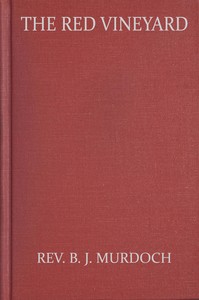
The Red Vineyard by B. J. Murdoch
I stumbled upon this 1920s Canadian novel almost by accident, and I'm so glad I did. 'The Red Vineyard' feels like discovering a quiet, forgotten photograph that holds a whole world inside it.
The Story
The story follows a determined man who arrives in a poor farming community in Nova Scotia. He buys a worn-out piece of land that everyone else has given up on. His plan? To plant a vineyard and make wine. His new neighbors think he's foolish. The weather is against him. The soil seems to fight back. The book walks us through the grinding, year-by-year work of trying to make this dream a reality. We see him clear the land, plant the vines, and face failures that would make most people quit. It's a story told through the seasons, through frozen winters and hopeful springs, where a single blossoming vine feels like a major victory.
Why You Should Read It
What grabbed me wasn't crazy plot twists, but the sheer, quiet strength of the main character. Murdoch writes about work—real, physical, dirty work—in a way that makes it feel important and almost sacred. The struggle isn't glamorous, but it's deeply honest. You feel the ache in his back, the sting of disappointment, and the fragile hope that comes with each new year. It's also a fascinating look at a specific time and place, where old-world traditions bump up against a rugged new land. The writing is straightforward and clear, pulling you right into the landscape and the rhythm of farm life.
Final Verdict
If you love slow-burn stories about human grit, if you enjoy books rooted in a strong sense of place, or if you just want a break from fast-paced modern plots, give this a try. It's perfect for readers who appreciate historical fiction about ordinary people doing extraordinary things, one stubborn day at a time. Think of it as a companion for a quiet afternoon—a patient, rewarding book that grows on you, much like a vine slowly claiming its place in the earth.
You are viewing a work that belongs to the global public domain. Share knowledge freely with the world.
David Jones
1 year agoI wanted to compare this perspective with traditional views, the transition between theoretical knowledge and practical application is seamless. I'll be citing this in my upcoming project.
Karen Martin
1 year agoClear, concise, and incredibly informative.
Karen Anderson
10 months agoFinally found a version that is easy on the eyes.
Donald Martinez
11 months agoWhile browsing through various academic sources, the inclusion of diverse viewpoints strengthens the overall narrative. It’s hard to find this much value in a single source these days.

William Brown
11 months agoBefore I started my latest project, I read this and the formatting on mobile devices is surprisingly crisp and clear. Truly a masterpiece of digital educational material.