1

The Snowshoe Trail — A Closer Reading
(0 User reviews)
464
Project Gutenberg
2008
Not confirmed
Canada -- Fiction; Adventure stories
Readers of public-domain and historical texts
Project Gutenberg digital edition
en
Edition facts
Words
89,583
Reading time
390 min
Text sections
10
For The Snowshoe Trail — A Closer Reading, the stored edition analysis reports 89,583 words, 6 hr 30 min estimated reading time, and 10 detected text sections.
The text analysis averages about 15.0 words per sentence, while the detected sections provide another way to judge how the source is divided.
Project Gutenberg metadata also associates the work with “Canada -- Fiction,” connecting these edition facts with the source record’s subject description.
Source:
Project Gutenberg record #24695
Edison Marshall's 1921 novel uses a distinctive narrative voice that shifts between lyrical descriptions of the Canadian wilderness and terse dialogue, with pacing that alternates between contemplative pauses and brisk action. The opening scene establishes a woodsman's silent observation of Bradleyburg, while later excerpts reveal psychological tension through Virginia's internal doubts.
Editorial Edition Score
4.8/5
★★★★★
★★★★★
Calculated from edition completeness, EPUB availability, text structure and catalogue metadata. Not a user rating.
How this score is calculated
- Description quality20 pts
- Title & short description10 pts
- Source metadata20 pts
- Text length15 pts
- Chapters / structure15 pts
- EPUB file integrity20 pts
Total of 100 points, scaled to a 2.5-5.0 range. Editions with an empty description or a missing EPUB file are not scored.
Edition quality
Read the Text
They had few words at first. The lesson of silence is taught deeply and sure in the North. The hostess went to her kitchen to order the man's supper, the townsmen drew at their pipes.
"Well, Bill," one of them asked at last, "how's everything with you?"
It was not the usual how-d'ye-do of greeting. The words were spoken in actual question, as if they had special significance.
The man straightened, turning sober eyes. "Nothing startling yet," he replied.
There was a long pause. The conversation was apparently ended. Bill turned to go. A stranger spoke from the other side of the fire.
"How's Grizzly River?" he asked. Bill turned to him with a smile.
"Getting higher and higher. All the streams are up. You know that bald-faced bay of Fargo's?"
Fargo was the Bradleyburg merchant, and the stranger knew the horse,--one of the little band that, after the frontier custom, Fargo kept to rent. "Yes, I remember him."
"Well, I've got him this fall. You know he's a yellow cuss."
The stranger nodded. In this little community the dumb brutes were almost as well known as the human inhabitants. The meaning was wholly plain to him too, and the term did not apply to the horse's color. Yellow, on the frontier, means just one thing: the most damning and unforgivable thing of all. When one is yellow he gives up easily, he dares not lift his arms to fight, and the wilderness claims him quickly. "There's a little creek with a bad mudhole just this side of the ford," Bill went on. "All the horses got through but Baldy, and he could have made it easy if he'd tried. But what did he do but just sit back on his haunches in the mud, like an old man in a chair, his head up and his front legs in his lap, and just give up? Quite a sight--that horse sitting in the mud. I had to snag him out."
The others smiled, but none of them with the brilliance of the story-teller himself. The wilderness picture--with the cowardly horse sitting in the mud--was again before his eyes; and none of the hardship of the journey could cost him his joy in it. Bill Bronson was no longer just a dim form on the twilight hilltop. The lamplight showed him plain. In this circle of townspeople he was a man to notice twice.
The forests had done well by him. Like the spruce themselves he had grown straight and tall, but his form was sturdy too. There was a lithe strength about him that suggested the larger felines; the hard trails of the forest had left not a spare ounce of flesh on his powerful frame. His mold, except for a vague and indistinct refinement in his long-fingered and strong hands, was simply that of a woodsman,--sturdy, muscular, untiring. His speech was not greatly different from that of others: the woodspeople, spending many of the long winter days in reading, are usually careless in speech but rarely ungrammatical. His clothes were homely and worn. He wore a blue mackinaw over a flannel shirt, dark trousers and rubber boots: garments that were suited to his life.
But it was true that men looked twice into Bill Bronson's face. His features were rugged, now his mouth and jowls were dark with beard, yet written all over his sunburned face was a kindliness and gentleness that could not be denied. There was strength and good humor in plenty; and it was hard to reconcile these qualities with an unquestioned wistfulness and boyishness in his eyes. They were dark eyes, the eyes of a man of action who could also dream, kindly, thoughtful eyes which even the deep shadows of the forest had not blinded to beauty.
As he waited for his meal he crossed the dark road to the little frontier post office, there to be given his two months' accumulation of letters. He looked them over with significant anxiety. There were the usual forders from fur buyers, a few advertisements and circulars, and a small batch of business mail. The smile died from his eyes as he read one of these communications after another. Their context was usually the same,--that his proposition did not look good, and no investment would be made in a plan as vague as his. The correspondents understood that he had been grubstaked before without result. They remained, however, his respectfully,--and Bill's great hand crumpled each in turn.
Edison Marshall opens The Snowshoe Trail with a deliberate, almost painterly description of a woodsman emerging from a spruce forest to gaze down at Bradleyburg at twilight. The narrative voice lingers on the scene's atmosphere—the shadowed street, the moldering church spire, the dim lighted windows—before revealing the man's identity. This unhurried opening establishes a pattern of observation and interiority that recurs throughout the excerpts.
The prose shifts between a detached, almost anthropological view of the wild folk and a close focus on the woodsman's pensive expression. Marshall uses the landscape as a mirror for character: the woodsman's silence and sinuous strength mark him as part of the forest, while the town below represents both relief and a complex emotional pull. The pacing here is slow, inviting the reader into a world where even a horse's lowered head carries meaning.
Voice and the Wild Folk
Marshall's narrative voice in the opening chapter adopts a formal, slightly archaic register that suits the wilderness setting. Phrases like “the wild folk” and “denizens of the woods” create a mythic quality, while the description of the bull moose pausing to call at twilight anthropomorphizes the animals without sentimentality. The coyotes “wailed out their cries over the rooftops,” and the wolf pack “halted here for a fleeting instant”—these details establish a world where human and animal observers share the same landscape.
The voice is consistently observational, rarely editorializing. When the narrator notes that the woodsman's expression “revealed relief, of course, simple and heartfelt joy,” the “of course” implies a shared understanding with the reader, a subtle invitation into the codes of the North Woods. This narrative stance persists: later, when Virginia repeats reassurances to herself, the voice comments that “there was something vaguely sinister” in the repetition, but it does not explain further. The restraint leaves room for the reader to sense the growing unease.
Pacing Through Dialogue and Action
The excerpts show a marked shift in pacing when dialogue enters. In the cabin-building scene, the exchange between Harold and Virginia is brisk and clipped: “I'm really not much good at cabin building,” Harold says, and Virginia's reply is immediate and sharp. The narrative then accelerates into a sequence of actions—“cut short logs, cleaned away the snow, lifted the logs”—with short, parallel clauses that mimic the physical labor. The floor space is given in exact dimensions: “seven feet long by eight wide,” grounding the scene in concrete detail.
This faster pace contrasts with the earlier, meditative opening. Marshall uses the change to signal a shift in focus from external landscape to interpersonal tension. The work is completed “at the day's end,” and the narrative immediately pivots to Harold's progress with Virginia, compressing days into a few sentences. The pacing here reflects Harold's impatience and Virginia's internal conflict, moving from physical to psychological terrain without losing momentum.
Recurring Details and Their Weight
Certain details recur across the excerpts, gaining significance through repetition. The twilight setting appears in the opening and is echoed in the “deepening shadows” that obscure the woodsman's face. Lighted windows, first described as “dim, pale gleam,” become a symbol of destination and human connection. The horse, held by the bridle rein in the first paragraph, reappears in the pack horses that “halted, waiting for their master”—a detail that emphasizes the woodsman's role as leader and the animals' patient endurance.
Another recurring element is the act of pausing and musing. The woodsman “stood musing, held by the darkened scene”; later, Virginia finds herself “repeating the thought so many times.” These pauses create a rhythm of reflection that punctuates the action. The cabin's dimensions—seven by eight feet—are given with precision, as if to anchor the emotional drama in a physical space. Marshall uses such concrete details to ground the narrative, preventing the wilderness from becoming merely symbolic.
Readers attentive to narrative voice will notice how Marshall's prose shifts between a detached, almost documentary tone and a more intimate psychological register. The pacing, too, varies: the opening's slow, descriptive passages give way to quicker, dialogue-driven scenes. Pay particular attention to the moments when the narrator steps back to observe a character's posture or a landscape detail—these are the hinges on which the story turns. The excerpts offer only a partial view, but they reveal a writer carefully calibrating distance and intimacy.
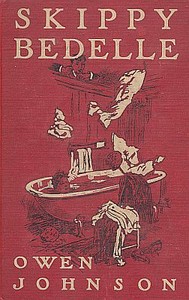
There are moments in The Snowshoe Trail where the silence between lines feels heavier than the words themselves, and I kept remembering another book, one where a boy’s clumsy earnestness grows into something quieter and more knowing — that same ache of becoming. It’s in the pauses, I think, where we learn what we’re made of. That old Skippy Bedelle His Sentimental Progress From the Urchin to the Complete Man of the World — Text and Context has that same tender hush beneath its surface, like a whisper carried across cold air.
There are no reviews for this eBook.
There are no comments for this eBook.
Reader reflection
What was your reading experience?
Capture what you thought, learned, and would like to remember.
Your progress
0
/
10
2
Did this book hold your interest?
3
How likely are you to recommend this book?
4
What was the reading difficulty like?
5
Would this book work well in a reading group?
6
Which aspect of the book did you value most?
7
Did the book meet your expectations?
8
How strongly did the book affect you emotionally?
9
In one sentence, what did you learn?
10