1

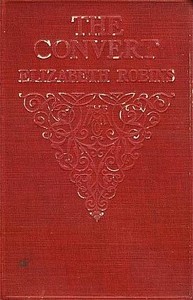
The Convert — Reading Companion
(0 User reviews)
822
Project Gutenberg
2008
Not confirmed
Feminist fiction; Women -- Fiction; Suffragists -- Fiction
Readers of public-domain and historical texts
Project Gutenberg digital edition
en
Edition facts
Words
120,121
Reading time
523 min
Text sections
12
The catalog record for The Convert — Reading Companion provides practical reading context through 120,121 words, 8 hr 43 min estimated reading time, and 12 detected text sections.
The text analysis averages about 14.0 words per sentence, while the detected sections provide another way to judge how the source is divided.
Project Gutenberg metadata also associates the work with “Feminist fiction,” connecting these edition facts with the source record’s subject description.
Source:
Project Gutenberg record #26420
Elizabeth Robins's 1907 novel follows the conversion of a wealthy woman to the suffragette cause, using sharp dialogue and social observation to explore class, gender, and the price of political conviction.
Editorial Edition Score
4.8/5
★★★★★
★★★★★
Calculated from edition completeness, EPUB availability, text structure and catalogue metadata. Not a user rating.
How this score is calculated
- Description quality20 pts
- Title & short description10 pts
- Source metadata20 pts
- Text length15 pts
- Chapters / structure15 pts
- EPUB file integrity20 pts
Total of 100 points, scaled to a 2.5-5.0 range. Editions with an empty description or a missing EPUB file are not scored.
Edition quality
Read the Text
There were already a dozen or so persons in the gold-and-white drawing-room, yet the moment Vida Levering entered, she knew from the questing glance Mrs. Freddy sent past her children's visitor, that even now the party was not complete.
Other eyes turned that way as the servant announced 'Miss Levering.' It is seldom that in this particular stratum of London life anything so uncontrolled and uncontrollable as a 'sensation' is permitted to chequer the even distribution of subdued good humour that reigns so modestly in the drawing-rooms of the Tunbridge world. If any one is so ill-advised as to bring to these gatherings anything resembling a sensation, even if it is of the less challengeable sort of striking personal beauty, the general aim of the company is to pretend either that they see nothing unusual in the conjunction, or that they, for their part, are impervious to such impacts. Vida Levering's beauty was not strictly of the _eclatant_ type. If it did--as could not be denied--arrest the eye, its refusal to let attention go was mitigated by something in the quietness, the disarming softness, with which the hold was maintained. Men making her acquaintance frequently went through four distinct phases in their feeling about her. The first was the common natural one, the instant stirring of the pulses that beauty of any sort produces in persons having the eye that sees. The second stage was a rousing of the instinct to be 'on guard,' which feminine beauty not infrequently breeds in the breasts of men. Not on guard so much against the thing itself, or even against ready submission to it, but against allowing onlookers to be witness of such submission. Even the very young man knows either by experience or hearsay, that women have concentrated upon their faculty for turning this particular weapon to account, all the skill they would have divided among other resources had there been others. Yet the charm is something too delicious even to desire to escape from--the impulse centres in a determination to _seem_ untouched, immune.
The third stage in this declension from pleasure through caution to reassurance is induced by something so gentle, so unemphatic in the Vida Levering aspect, so much what the man thinks 'feminine,' that even the wariest male is reassured. He comes to be almost as easy before this particular type of allurement as he would be with the frankly plain 'good sort'; only there is all about him the exquisite aroma of a subtle charm which he may almost persuade himself that he alone perceives, since this softly gracious creature seems so little to insist upon it--seems, indeed, to be herself unaware of its presence. Whereupon the man conceives a new idea of his own perspicacity in detecting a thing at once so agreeable and so little advertised. He may, with a woman of this kind, go long upon the third 'tack'--may, indeed, never know it was she who gently 'shunted' him, still unenlightened, and left him side-tracked, but cherishing to the end of time the soothing conviction that he 'might an' if he would.' To the more robust order of man will come a day of awakening, when he rubs his eyes and retreats hurriedly with a sense of good faith injured--nay, of hopes positively betrayed. If she were '_that_ sort,' why not hang out some signal? It wasn't playing fair.
And so without anything so crude as a sensation, but with a retinue of covert looks following in her train, she made her way to the young hostess, and was there joined by two men and a middle-aged woman, who plainly had been a beauty, and though 'gone to fat,' as the vulgar say, had yet kept her complexion. With an air of genial authority, the pink-cheeked Lady John Ulland proceeded to appropriate the new-comer in the midst of a general hum of conversation, whose key to the sensitive ear had become a little heightened since the last arrival. The women grew more insistently vivacious in proportion as the men's minds seemed to wander from matters they had discussed contentedly enough before.
The novel opens not with a political rally but in a nursery, where the protagonist, Miss Levering, arrives early for a dinner party and is directed upstairs to visit the children. The scene establishes her as a figure of warmth and familiarity within a wealthy household, yet the nurse's hauteur and the children's eager demands for 'bocks' hint at the social hierarchies and domestic constraints that will be challenged as the story unfolds. Robins uses this domestic setting to ground the later political arguments in lived experience, contrasting the sheltered world of the nursery with the brutal realities of the suffrage campaign.
The Argument from Experience
The excerpts reveal a central tension between abstract principle and personal testimony. When Miss Claxton, a working-class suffragette, describes carrying a whip for protection, she grounds her argument in specific incidents: 'little Mary O'Brian went out, without consulting anybody, and bought me the whip.' The detail is not merely anecdotal; it is offered as evidence of a system that forces women to arm themselves against male violence. Miss Levering, initially skeptical, is drawn into a conversation where the price of activism—prison, public humiliation, physical danger—is weighed against the certainty of eventual success. Robins allows the ex-prisoner to speak in a voice that is both weary and resolute, avoiding sentimentalism by focusing on the practical logic of resistance.
Class and the Suffrage Movement
A recurring friction in the excerpts is the class divide between the women. Miss Claxton criticizes upper-class women as 'sexless creatures,' a charge that Miss Levering finds ironic given that the same accusation is leveled at suffragettes. The dialogue exposes how class privilege shapes perceptions of femininity and political commitment. Miss Levering's instinctive reach for her cheque-book contrasts with the mill girl who came to London with only two pounds. Robins does not resolve this tension; instead, she lets the characters voice their frustrations, showing that the movement's internal conflicts are as significant as its external battles. The novel thus becomes a study of how women from different backgrounds negotiate solidarity without erasing their differences.
The Price of Conviction
When Miss Levering asks if the suffragettes fear their efforts may be in vain, the reply is unequivocal: 'No. We are quite certain to succeed. We have found the right way at last.' Yet this confidence is immediately qualified by the acknowledgment that success comes 'very hard on those few who pay with the person.' The dialogue circles around the idea that prison is not the worst punishment—a hint at other forms of suffering that remain unnamed in the excerpts. Robins uses this reticence to create a sense of unspeakable experience, leaving the reader to infer the full scope of what the women endure. The whip, the dog-whip, the fear of ridicule: these are not symbols but tools and tactics in a struggle where the body itself is a site of political contestation.
Readers should attend to the way Robins builds her argument through conversation rather than polemic. The novel's power lies in its accumulation of small, telling details—the nurse's disdain, the children's demands, the whip produced from a pocket—that together create a portrait of a society on the verge of transformation. The excerpts offer only a fragment of the full narrative, but they suggest a work that is as much about the psychology of conversion as about the politics of suffrage.
Reading about Vida’s costly awakening, I remembered sitting on a cold porch, turning pages of The Snowshoe Trail — A Closer Reading, feeling that same quiet ache — how conviction always asks you to leave some comfort behind. Both books left me staring at the snow, not quite sure what I’d brought back inside with me.
There are no reviews for this eBook.
There are no comments for this eBook.
Reader reflection
How will you remember this book?
Save your reaction, strongest insight, and memorable passage.
Your progress
0
/
10
2
Was reading this book enjoyable?
3
Is this a title you would suggest to others?
4
What was the reading difficulty like?
5
Did anything about the book feel genuinely new?
6
Did the book give you something worth debating?
7
Did the book meet your expectations?
8
How useful were the ideas in this book?
9
What is the main idea you are taking away?
10