1

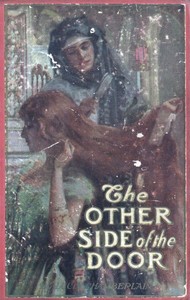
The Other Side of the Door — Key Ideas to Explore
(0 User reviews)
308
Project Gutenberg
2008
Not confirmed
Murder -- Fiction; San Francisco (Calif.) -- Fiction
Readers of public-domain and historical texts
Project Gutenberg digital edition
en
Edition facts
Words
51,356
Reading time
224 min
Text sections
6
The source record for The Other Side of the Door — Key Ideas to Explore measures this digital text at 51,356 words, 3 hr 44 min estimated reading time, and 6 detected text sections.
The text analysis averages about 19.3 words per sentence, while the detected sections provide another way to judge how the source is divided.
Project Gutenberg metadata also associates the work with “Murder -- Fiction,” connecting these edition facts with the source record’s subject description.
Source:
Project Gutenberg record #25724
A first-person narrative set in gray San Francisco, where a young woman's memory of her mother's death and a murder trial collide with a Spanish woman's jewel-laden bribe, testing honor against fear.
Editorial Edition Score
4.7/5
★★★★★
★★★★★
Calculated from edition completeness, EPUB availability, text structure and catalogue metadata. Not a user rating.
How this score is calculated
- Description quality20 pts
- Title & short description10 pts
- Source metadata20 pts
- Text length15 pts
- Chapters / structure15 pts
- EPUB file integrity20 pts
Total of 100 points, scaled to a 2.5-5.0 range. Editions with an empty description or a missing EPUB file are not scored.
Edition quality
Read the Text
There was a secret shut away from me behind every closed house front; the eucalyptus trees seemed to whisper "mystery" above my head; and at night, when the fog came heaping in, thicker than feather-beds, across the Mission, and streaming down the long hills on the heels of the wind, it brought an army of ghosts to inhabit the dark places beyond the safety of the lighted window-pane. Though I had lived among the seven hills almost all my life; and though in ways it had grown familiar, and even dear to me, yet I never seemed to grow quite used to the city. It had strange tricks of deception that were enough to unsettle the finest faith. For when I looked at it from the windows of my room under the roof it was as flat as a plate, visible in its entirety from end to end, and it was as easy to find Telegraph Hill or the Plaza upon it as it was to pick up a block from the carpet. But, when I went abroad in it, it hid away from me. It would never show me more than one street at a time, and never by any chance would it reveal to me, through the tall houses, in what part of it I was walking.
But by the time I was old enough to play in the garden by myself, and make friends through the hedge with Hallie Ferguson, who lived a block below us, I had come to accept this trick of the city as somewhat less extraordinary. It was developing other characteristics not so fearful to my mind and of far greater fascination; and I spent hours, when I could not be out of doors, watching it from the windows of my room. Father had built what was at the time one of the finest houses in San Francisco. It had a glass conservatory at the side, and a garden with a lawn and palm in the corner; and on rainy nights when the wind was high, and the house was shaking, I could hear the long palm-fingers tap-tapping on my window glass. The house stood half-way up Washington Street Hill, on what was then the western skirts of the city, and from my window under the roof I could look down over the whole city to the east water front, with Rincon Hill misty on the south, and Telegraph bold on the north of it. By leaning far out of the window, as Hallie and I sometimes did when a ship was coming in, we could see northward as far as North Beach, and Alcatraz Island; and from Abby's room across the hall we could continue the panorama around to Russian Hill, whose high crown cut off the Golden Gate. It was a favorite game of ours, hanging out the window, with our heads in the palm leaves, to pretend stories of what we saw going on in the city beneath.
All sorts of strange and interesting things went on in the city. We could see the signals run up on Telegraph Hill when a ship was sighted. And then the "express" would go dashing furiously down some street below us, the pony at gallop; and the line would form in front of the post-office and stretch like a black snake up Washington Street. Or we watched the yellow omnibuses laboring down Washington Street like clumsy beetles. It seemed to me that a city was the most delightful and absorbing plaything a child could have, and it was a hard arbitrary blow of fate that took me from it to the convent school at Santa Clara.
But if to leave the city was hard, it was terrible indeed to leave the house, the familiar rooms, the familiar footsteps and voices that I loved, and listened for. I had never been away from father and Abby in my life, and though Hallie Ferguson and Estrella Mendez went also, I was very homesick.
There was nothing at all interesting at the convent,--nothing but pepper trees, and nun's black hoods, and books. Even when we walked out there were only the dreary Santa Clara flats with the mountains so distant on the horizon that their far-awayness made me want to cry. The only nice thing about the convent was the vacation that took us away from it, back, out of the burning summer valley to the bay, the rows of gray-faced houses, the shipping and the wind. Each time I came back it was with the rapture one must feel returning to some long left, beloved place and finding it unchanged.
The prologue establishes San Francisco as a character in its own right: a city of perpetual gray, where even the spring grass looks old and the eucalyptus trees knock against house fronts. The narrator recalls childhood terror of the city's harsh noises and perilous water, a fear that recedes into a blur of rapid changes, leaving only three clear figures: a teasing father, a grim nurse, and a pale mother. The first distinct memory is the mother's death—a puzzle for a child, as she was there one day and gone the next.
This opening voice is intimate and retrospective, blending sensory detail with emotional distance. The city's grayness is not sad but restless, like the tide, and the narrator's early confusion sets a tone of unresolved mystery that permeates the novel.
A Voice That Wavers Between Innocence and Irony
The narrator's language shifts noticeably between childlike perception and adult reflection. In the prologue, she speaks of being “terrified” by the city's “harsh, threatening voice,” yet later describes the Spanish Woman's jewels with a mixture of awe and revulsion: “a necklace like a wreath of light” and “drops of blood, red, and brilliant green.” The contrast suggests a mind caught between naivete and a growing awareness of danger. When the Spanish Woman offers bribes, the narrator's internal response is physical—her head feels light, the room grows dreamy—but her spoken words are rigid: “It is a question of honor.” This tension between visceral fear and moral certainty creates an unstable narrative voice, one that may not be entirely reliable.
Pace as a Tool of Suspense
The pacing in the excerpts is deliberately uneven. The prologue moves slowly, lingering on atmospheric details—the color of cypress hedges, the weight of fog—before accelerating into the abrupt disappearance of the mother. Later, in the confrontation with the Spanish Woman, the rhythm tightens: short sentences (“I shrank from her in mere amazement.”), quick actions (“She turned sharply about, and crossed the room.”), and a flurry of descriptive verbs (“flung,” “kneeled,” “fumbled,” “clicking”). The jewel scene builds to a crescendo of sensory overload—sight, weight, sound—then halts on the narrator's refusal. This stop-start structure mirrors the narrator's internal conflict, drawing the reader into her hesitation.
Recurring Motifs of Confinement and Exposure
Two images recur: doors and mirrors. The title itself points to a threshold, and the Spanish Woman's chest of jewels is described as having “a series of locks.” The narrator clings to her chair “as if it had been my last principle of faith,” suggesting a need for physical anchors. Mirrors appear at key moments: the Spanish Woman pulls the narrator before a “great mirror” to show her transformed, crowned and hung with necklaces. Yet the reflection shows a “small, shrinking figure” in white—a visual echo of the pale mother from the prologue. These motifs of locked boxes, closed doors, and reflective surfaces hint at hidden truths and the narrator's struggle to see herself clearly amid others' designs.
Readers should attend to the narrator's selective memory and the gaps in her account. The prologue admits that beyond the mother's death, little is clear; later, the Spanish Woman's bribe scene is rendered in vivid detail, but the narrator's emotional state remains opaque. Pay attention to what is left unsaid—the moments when the voice falters or shifts abruptly. The novel's power lies not in the murder plot alone, but in the narrator's struggle to reconcile her past terrors with present demands, and in the gray city that watches it all.
That gray San Francisco story, with its jewel and its jury, always made me think of how honor gets tangled in what we dare not say. Years later, another volume sat beside it, softer, asking what love costs when fear answers first. They share a quiet hush, those two, like old friends nodding across a reading room. To Love — Text and Context holds the same ache, gentler, but no less true.
There are no reviews for this eBook.
There are no comments for this eBook.
Reader reflection
How did this book work for you?
Your answers remain private and are stored only in this browser.
Your progress
0
/
10
2
How did the book work for you overall?
3
How likely are you to recommend this book?
4
Did the language feel accessible?
5
Did the book give you something worth debating?
6
How original did the book feel?
7
Which part made the strongest impression?
8
How did the reading compare with what you expected?
9
Which lesson or insight stayed with you?
10