1

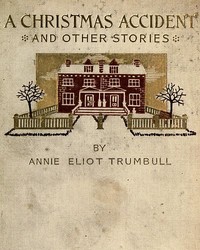
A Christmas Accident and Other Stories — Reading Notes
(0 User reviews)
373
Project Gutenberg
2009
Not confirmed
Christmas stories; United States -- Social life and customs -- 19th century -- Fiction
Readers of public-domain and historical texts
Project Gutenberg digital edition
en
Edition facts
Words
40,953
Reading time
179 min
Text sections
4
For A Christmas Accident and Other Stories — Reading Notes, the stored edition analysis reports 40,953 words, 2 hr 59 min estimated reading time, and 4 detected text sections.
The text analysis averages about 18.6 words per sentence, while the detected sections provide another way to judge how the source is divided.
Project Gutenberg metadata also associates the work with “Christmas stories,” connecting these edition facts with the source record’s subject description.
Source:
Project Gutenberg record #28307
Annie Eliot Trumbull's 1900 collection uses precise domestic details and restrained dialogue to explore quiet conflicts in late-19th-century New England, from a fence dispute between neighbors to the bittersweet return of old friends.
Editorial Edition Score
4.6/5
★★★★★
★★★★★
Calculated from edition completeness, EPUB availability, text structure and catalogue metadata. Not a user rating.
How this score is calculated
- Description quality20 pts
- Title & short description10 pts
- Source metadata20 pts
- Text length15 pts
- Chapters / structure15 pts
- EPUB file integrity20 pts
Total of 100 points, scaled to a 2.5-5.0 range. Editions with an empty description or a missing EPUB file are not scored.
Edition quality
Read the Text
Cordelia was the youngest of the five. All the rest had very simple names,--John, Walter, Fanny, and Susan,--but when it came to Cora Cordelia, luxuries were beginning to get very scarce in the Bilton family, and Mrs. Bilton felt that she must make up for it by being lavish, in one direction or another. She had wished to name Fanny, Cora, and Susan, Cordelia, but she had yielded to her husband, and called one after his mother and one after herself, and then gave both her favorite names to the youngest of all. Cora Cordelia was a pretty little girl, prettier even than both her names put together.
After the red bench came a quicksilver ball, that was put in the middle of the yard and reflected all the glory of its owner, albeit in a somewhat distorted form. This effort of human ingenuity filled the Bilton children with admiration bordering on awe; Cora Cordelia spent hours gazing at it, until called in and reproved by her mother for admiring so much things she could not afford to have. After this, she only admired it covertly.
Small distinctions like these barbed the arrows of contrast and comparison and kept the disadvantages of neighborhood ever present.
Then, it was a constant annoyance to have their surnames so much alike. Matters were made more unpleasant by mistakes of the butcher, the grocer, and so on,--Gilton, 79 Holmes Avenue, was so much like Bilton, 77 Holmes Avenue. Gilton changed his butcher every time he sent his dinner to Bilton; and though the mistakes were generally rectified, neither of the two families ever forgot the time the Biltons ate, positively ate, the Gilton dinner, under a misapprehension. Mrs. Bilton apologized, and Mrs. Gilton boldly told her husband that she was glad they'd had it, and she hoped they'd enjoyed it, which only made matters worse; and altogether it was a dark day, the only joy of it being that fearful one snatched by John, Walter, Susan, Fanny, and Cora Cordelia from the undoubted excellence of the roast.
Of course there was an assortment of minor difficulties. The smoke from the Biltons' kitchen blew in through the windows of the Giltons' sitting-room when the wind was in one direction, and, when it was in the other, many of the clothes from the Giltons' clothesline were blown into the Biltons' yard, and Fanny, Susan, or Cora Cordelia had to be sent out to pick them up and drop them over the fence again, which Mrs. Bilton said was very wearing, as of course it must have been. Things like this were always happening, but matters reached a climax when it came to the dog. It wasn't a large dog, but it was a tiresome one. It got up early in the morning and barked. Now we all know that early rising is a good thing and honorable among all men, but it is something that ought to be done quietly, out of regard to the weaker vessels; and a dog that barks between five and seven in the morning, continuously, certainly ought to be suppressed, even if it be necessary to use force. Everybody agreed with the Biltons about that,--everybody except the Giltons themselves, who, by some one of nature's freaks, didn't mind it. Mrs. Bilton often said she wished Mrs. Gilton could be a light sleeper for a week and see what it was like. So, too, everybody thought that Mr. Bilton had right on his side when he complained that this same dog came into his yard, being apparently indifferent to any coolness between the estate owners, and ran over a bed of geraniums and one thing and another, that was the small Bilton offset to the Gilton bench and ball. But when one morning, for the first time, that dog remained quiet and restful, and was found cold and poisoned, and Mr. Gilton was loud in his accusations of the Bilton boys and their father, public opinion wavered for a moment. After that accident, no member of either family spoke to any member of the other. That was the way matters stood the day before Christmas.
Annie Eliot Trumbull opens 'A Christmas Accident' with a pair of nearly identical brick houses whose occupants could not be more different. The narrator’s wry observation that Mr. Gilton is 'pretty cross' and 'well-to-do, as cross people sometimes are' immediately establishes a tone of understated irony. The fence that separates the two yards becomes the story’s central object—a three-inch encroachment that sparks a lawsuit, draining Mr. Bilton’s money and setting the stage for a Christmas reconciliation. Trumbull’s prose is economical, favoring concrete details over sentiment, and her dialogue captures the rhythms of everyday speech without melodrama.
The Weight of a Fence
The opening story hinges on a boundary dispute that is both literal and figurative. Trumbull describes the fence as a source of 'long, teasing lawsuit' that costs Mr. Bilton 'a good deal of his money.' The narrator’s dry comparison—'it might have been three degrees of the Arctic Circle for the trouble there was in getting at'—reveals a wry authorial voice that undercuts the gravity of the conflict. The fence is not merely a plot device; it is a symbol of the petty grievances that isolate the Giltons from their neighbors. Trumbull’s choice to begin with this mundane object signals her interest in how small material things shape human relationships.
Dialogue as Revelation
In 'After—the Deluge,' Trumbull uses dialogue to expose the emotional undercurrents of a reunion. When Mary Leonard and Lucy Eastman visit their childhood haunt, their conversation is punctuated by pauses and unfinished sentences. Lucy ‘caught her breath’ and left her sentence unfinished; Mary’s voice ‘shook a little’ when she said she was tired. These verbal hesitations convey a shared sadness that the characters themselves do not fully articulate. Trumbull trusts her readers to read between the lines, a technique that gives the dialogue a natural, unforced quality. The exchange about old Miss Pinsett—'Oh, Mary, if only she—'—is left hanging, inviting inference without resolution.
Recurring Details and the Passage of Time
Trumbull anchors her stories in specific, repeatable details that mark the passage of years. In 'After—the Deluge,' the old fort’s 'long grass wavered in the wind with the glancing uncertainty of a conflagration'—a simile that Lucy recalls from a previous visit. The cab ride to Miss Pinsett’s house is filled with familiar landmarks: the 'square white house, with the cupola,' the 'box-bordered path,' the 'old piano and the Japanese vases.' These objects are not merely decorative; they are touchstones that allow the characters to measure how much—or how little—has changed. Miss Pinsett herself is described as 'not a day older,' wearing 'the same gray curls and the same kind of cap,' a detail that underscores the story’s theme of continuity amid loss.
Understated Emotion in Domestic Spaces
Trumbull’s emotional climaxes are often quiet and domestic. When Mary and Lucy meet Miss Pinsett, they 'declared that they should have wept aloud if it had not been so evident that to Miss Pinsett there was nothing in the meeting but happiness and good fortune, so they did not.' The restraint here is characteristic: the narrator reports the characters’ feelings without dramatizing them. The scene takes place in a 'dim shaded parlor,' a setting that muffles intense emotion. Trumbull’s preference for understatement over overt sentiment gives her stories a psychological realism that aligns with the domestic fiction of her era, yet her authorial voice remains distinctively dry and observant.
Readers approaching this collection should attend to the small, precise details that Trumbull uses to build her world: the three-inch fence, the rustle of Miss Pinsett’s gown, the 'glancing uncertainty' of grass in the wind. These are not ornaments but the very fabric of her storytelling. Her dialogue, full of hesitations and half-spoken thoughts, rewards close attention. The stories are best read slowly, allowing the quiet tensions and understated humor to accumulate.
That rainy afternoon, I kept thinking about the quiet ache in Trumbull’s New England—how a fence dispute could hold a lifetime of unsaid things. Later, idly scanning shelves, I found The Innocents: A Story for Lovers — Key Ideas to Explore, and its softer, more hopeful trembling felt like the same song played in a warmer key. One book simply led to the other.
There are no reviews for this eBook.
There are no comments for this eBook.
Reader reflection
What was your reading experience?
Capture what you thought, learned, and would like to remember.
Your progress
0
/
10
2
How did the book work for you overall?
3
Is this a title you would suggest to others?
4
Did the language feel accessible?
5
Was the book what you thought it would be?
6
Could you follow the author’s main argument?
7
Did it raise ideas you would like to talk about?
8
Which element worked best for you?
9
Which lesson or insight stayed with you?
10