1

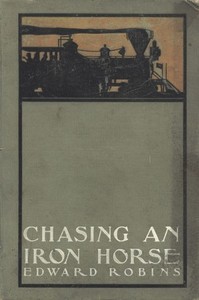
Chasing an Iron Horse; Or, A Boy's Adventures in the Civil War — Key Ideas to Explore
(0 User reviews)
1334
Project Gutenberg
2008
Not confirmed
United States -- History -- Civil War, 1861-1865 -- Fiction; Railroad stories
Readers of public-domain and historical texts
Project Gutenberg digital edition
en
Edition facts
Words
57,662
Reading time
251 min
Text sections
6
This digital edition of Chasing an Iron Horse; Or, A Boy's Adventures in the Civil War — Key Ideas to Explore is described by source-level measurements including 57,662 words, 4 hr 11 min estimated reading time, and 6 detected text sections.
The text analysis averages about 15.7 words per sentence, while the detected sections provide another way to judge how the source is divided.
Project Gutenberg metadata also associates the work with “United States -- History -- Civil War, 1861-1865 -- Fiction,” connecting these edition facts with the source record’s subject description.
Source:
Project Gutenberg record #26892
Edward Robins' 1902 novel fictionalizes the 1862 Great Locomotive Chase, blending historical figures like Andrews with invented characters. The excerpts show a focus on suspense, disguise, and the tension between Union raiders and Southern civilians, with the boy protagonist George navigating danger through quick thinking.
Editorial Edition Score
4.7/5
★★★★★
★★★★★
Calculated from edition completeness, EPUB availability, text structure and catalogue metadata. Not a user rating.
How this score is calculated
- Description quality20 pts
- Title & short description10 pts
- Source metadata20 pts
- Text length15 pts
- Chapters / structure15 pts
- EPUB file integrity20 pts
Total of 100 points, scaled to a 2.5-5.0 range. Editions with an empty description or a missing EPUB file are not scored.
Edition quality
Read the Text
Fuller was steaming to the northward with "The Yonah" 192 None too soon had he executed this manoeuvre 214 Watson placed his hand over the man's mouth 270
CHASING AN IRON HORSE
The lightning flashes, the mutterings of thunder, like the low growls of some angry animal, and the shrieking of the wind through swaying branches, gave a weird, uncanny effect to a scene which was being enacted, on a certain April night of the year 1862, in a secluded piece of woodland a mile or more east of the village of Shelbyville, Tennessee. In the centre of a small clearing hemmed in by trees stood a tall, full-bearded man of distinguished bearing. Around him were grouped twenty sturdy fellows who listened intently, despite the stir of the elements, to something that he was saying in a low, serious tone of voice. None of them, strangely enough, wore a uniform, although they were all loyal Union soldiers belonging to the division of troops commanded by General O. M. Mitchell, then encamped on the banks of Duck River, only a couple of miles away. For the country was now engaged in the life-and-death struggle of the Civil War, when Northerner fought against Southerner--sometimes brother against brother--and no one could predict whether the result would be a divided or a reunited nation.
"My friends," the speaker was solemnly saying, as a new flash from the darkened heavens lit up the landscape for a second, and showed how resolute were the lines of his face; "my friends, if you go into this scheme with me, you are taking your lives into your hands. It's only fair that I should impress this upon you, and give any and all of you a chance to drop out."
There was a quick, sharp clap of thunder, which was not loud enough, however, to drown the earnest protest of every listener. "We're not cowards, Andrews!" "We'll stick to you through thick and thin!" "Nobody's going to draw back!" These were among the fervent answers which greeted the leader addressed as Andrews. The latter was evidently pleased, though by no means surprised. He was dealing with brave men, and he knew his audience.
"All the better, boys," he went on, with a complacent ring in his soft but penetrating voice. "You see, this is the situation. The Confederates are concentrating at Corinth, Mississippi, and Generals Grant and Buell are advancing by different routes against them. Now, our own General Mitchell finds himself in a position to press into East Tennessee as far as possible, and he hopes soon to seize Chattanooga, after he has taken Huntsville, Alabama. But to do this he must cut off Chattanooga from all railroad communication to the south and east, and therefore all aid. In other words, we men are to enter the enemy's country in disguise, capture a train on the Georgia State railroad, steam off with it, and burn the bridges leading in the direction of Chattanooga, on the northern end of the road. It is one of the most daring ideas ever conceived, and its execution will be full of difficulties. If we fail we shall be hanged as spies! If we succeed, there will be promotion and glory for all of us, and our names will go down into history."
There was a murmur of encouragement from the men, as one said: "We must succeed, if only to save our necks." The next moment the barking of a dog could be heard above the whistling of the wind.
"Be careful," cried Andrews, warningly; "some one may be listening."
Hardly had he spoken before two figures bounded from the encircling trees into the open space wherein stood the startled conspirators. While flashes of lightning played through the branches, and gave fitful illumination to the scene, the men saw revealed a lad of about fifteen or sixteen years of age, flushed and breathless, and at his heels a tiny Yorkshire terrier, bright of face, and with an inquiring glance that seemed to say: "What is all this fuss about?" As the animal danced around the boy it was evident that the latter was by no means frightened, or even surprised, by the strangeness of this meeting in the forest. His regular, handsome features and intelligent, sparkling gray eyes denoted excitement rather than fear. He sprang forward, and, pulling a letter from an inner pocket of his blue jacket, made straight for Andrews.
"Why, if it isn't George Knight," muttered one soldier, "and his chum, Waggie."
The dog, hearing his own name, came up and fawned upon the man who had spoken, while the boy thrust into the hands of the leader the letter which he had so carefully guarded.
The opening chapter of Edward Robins' Chasing an Iron Horse; Or, A Boy's Adventures in the Civil War immediately establishes a stormy, clandestine atmosphere: lightning flashes, thunder like 'low growls of some angry animal,' and a group of Union soldiers in civilian clothes listening to a bearded leader. The setting—a secluded woodland near Shelbyville, Tennessee, in April 1862—grounds the story in the early phase of the war. Robins signals that the narrative will hinge on disguise and deception, as the men are 'loyal Union soldiers' yet wear no uniform. The leader's speech, though only partially quoted, frames the mission as a 'scheme' requiring great risk. The catalog classifies this as Science Fiction & Utopias, but the excerpts reveal no speculative elements; instead, the work is a historical adventure built around the real locomotive chase in Georgia, as the preface acknowledges.
Historical Basis and Fictional License
Robins' preface explicitly distinguishes between fact and invention: the locomotive chase 'was an actual occurrence,' and the character of Andrews is historic, while 'other incidents and characters are imaginary.' He directs readers to William Pittenger's firsthand account for the real story. This framing suggests the novel prioritizes adventure over strict accuracy. The excerpts show Andrews as a commanding figure who speaks 'with his old air of authority,' but the boy George and his dog Waggie are likely fictional additions. The preface's caution that 'the following pages belong to the realm of fiction' invites readers to treat the plot as a dramatized version of events, not a documentary.
Suspense Through Dialogue and Detail
Robins builds tension through dialogue and small actions. In Chapter VI, George overhears two Southerners—one a soldier with his arm in a sling—voicing suspicion about the 'powder train.' The soldier's 'wheedling voice' and pointed questions create a cat-and-mouse dynamic. George's feigned stupidity ('Dunno. I've nothing to do with it') shows his quick thinking. Earlier, the cutting of telegraph wires and removal of rails are described with precise, step-by-step detail: George climbs a pole with a cord, draws up an axe, cuts the wire, while others remove 'three rails from the track.' These concrete actions ground the suspense in tangible risks. The recurring motif of being 'chased' is introduced early when Macgreggor predicts 'a hot pursuit,' a prediction the others laugh off—foreshadowing the pursuit that drives the plot.
The Boy Protagonist's Role
George, the boy of the subtitle, is positioned as an active participant rather than a passive observer. He serves as fireman on the engine, and his interactions with suspicious Southerners reveal his resourcefulness. When the soldier asks about the 'powder train,' George puts on 'as stupid a look as he could assume' and claims ignorance. The narrative notes this was 'no easy task' for a boy with 'intelligent features,' subtly characterizing him as clever but forced to dissemble. His dog Waggie accompanies him, adding a touch of domesticity to the wartime setting. The excerpts do not reveal George's full backstory or motives, but his centrality is clear: he is the lens through which the adventure unfolds, and his survival depends on maintaining the Union raiders' cover.
Readers approaching Chasing an Iron Horse should note that the catalog subject 'Railroad stories' accurately reflects the core action, while 'Science Fiction & Utopias' is a misclassification—the work is firmly historical fiction. The excerpts offer a narrow window into the plot, focusing on the early stages of the chase; the outcome and George's fate are not indicated. Pay attention to how Robins balances historical figures like Andrews with invented characters, and how the boy's perspective shapes the narrative's tone. The novel's value lies in its period detail and suspenseful set-pieces, not in historical completeness.
Reading about George’s quick thinking in Chasing an Iron Horse reminded me of another kind of cleverness—quieter, more amused, yet just as wily. There is a warmth in watching someone navigate trouble by wit alone. It brought to mind the gentle charm of old small-town mysteries, where observation matters more than action, like in Anderson Crow, Detective — A Reader’s Guide, and I smiled at the kinship between those two unlikely heroes.
There are no reviews for this eBook.
There are no comments for this eBook.
Reader reflection
Record your reading impressions
A brief reflection can help important ideas stay with you longer.
Your progress
0
/
10
2
How much did you enjoy the reading experience?
3
Would you encourage someone else to read it?
4
How easy was the book to follow?
5
Could you see yourself revisiting this book?
6
What did you appreciate most?
7
Did the book deliver what you hoped for?
8
Was the book easy to understand?
9
What did this book teach you most?
10